
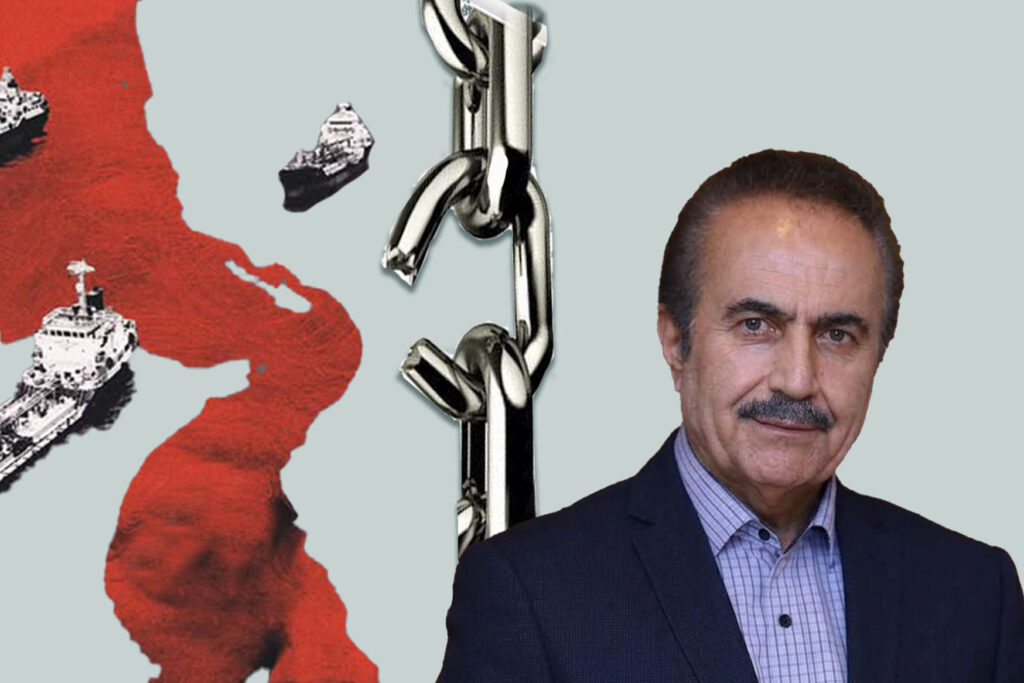
Interview with Dr. Esari, Chairman of the Strategic Council and Chairman of the Board of Sigma Institute by the Investment World
In the literature of industrial development, steel is not just a cycle, but a symbol of production power, a driver of economic infrastructure, and a sign of a country’s industrial power. For this reason, in many global conflicts and crises, steel industries and basic infrastructure are directly or indirectly affected by these events. The experience of the recent 40-day war showed that in military conflict conditions, the steel industry is one of the most important targets of threats, facing serious challenges and even shutdowns, as the sensitivity, importance, and impact of this industry on cash flow, employment, skills, knowledge, and ultimately industrial resilience are not hidden from any country.
This is an undeniable fact that in war conditions, damage to industry is not limited to physical destruction of equipment; but the shutdown of industrial production lines such as steel, disruption of supply chains, increased logistical costs, delays in development projects, reduced access to export markets, and increased investment risk, impose a set of hidden costs on the industry that sometimes have more effects than direct physical damages.
Perhaps one of the most important consequences of the recent crisis was the revelation of the vulnerability of production infrastructure to external threats. Having a predicted policy and roadmap for rapid reconstruction and maintaining production continuity is considered one of the most important missions of governments and companies. Any disruption in the power grid, gas, rail, or road transport can suddenly affect the entire influential chain in processes up to the final product.
It is at this point that the concept of “industrial resilience” becomes important. Resilience means the ability of an industry to continue operating in harsh market conditions and especially in crisis conditions, so that by quickly identifying challenges and rapid solutions to reduce damage, it can eventually return to normal conditions. The experience of various countries has shown that resilient industries are not necessarily those that never get hurt, but rather companies that have prepared themselves to face crises and have a plan for faster recovery.
Examining the conditions and status of large enterprises, especially steel companies, in various crises, from regional wars to other crises such as Europe’s energy crisis and the coronavirus pandemic, shows that several key factors play a decisive role in increasing resilience. In addition to having a plan to cover various risks, especially the risk of severe crises, and special training for human resources; the first factor is diversifying the supply chain. Companies that have not limited their supply of raw materials, parts, and services to limited sources show more flexibility in crisis conditions.
The second factor is having supporting infrastructure and alternative processes. The steel industry is heavily dependent on energy, and the recent crisis also showed that energy security is an essential and inseparable part of production security. Companies that have private and diverse power plants, strategic reserves, and emergency plans have more power to maintain production during a crisis.
The third factor, which can be considered as the precursor to all factors, is managerial preparedness. In many of the world’s leading companies, crisis management is recognized as an ongoing process, not a temporary reaction. These companies simulate various crisis scenarios, form rapid response teams, and have specific plans for emergency situations. The experience of the 40-day war showed that such an approach is also an inevitable necessity for Iran’s strategic industries.
Another issue that the recent crisis highlighted was the importance of protecting critical industrial infrastructure. In today’s world, steel factories are not just production centers; they are also part of a country’s strategic assets and vital arteries. Therefore, designing protective mechanisms, creating backup centers, developing monitoring systems, and strengthening infrastructure security should become part of industry development plans.
And yet, the important issue that should never be forgotten is digital transformation and supply and production processes; digital transformation can play a significant role in increasing resilience. Using intelligent production management systems, real-time equipment monitoring, data analysis, and integrated supply chain management provides the possibility of faster and more accurate decision-making in crisis conditions. Many of the world’s major steelmakers have developed these tools in recent years as part of their risk management strategy.
The recent 40-day crisis was not just an ordinary and transient event for Iran’s steel industry; it was a serious warning about the need to review the traditional approach to risk management and the importance of business continuity. The damages and disruptions caused by war conditions showed that production capacity, although important, is not the sole guarantee of success. What shapes the future of large industries is their ability to continue operating in the most difficult conditions.
Today, more than ever, it has become clear that investing in resilience is not a cost; it is a necessary and obligatory investment for maintaining production survival and sustainability. If Iran’s steel industry wants to maintain its position in the national economy and international markets in the coming years, it must, in addition to using modern technologies and developing production capacities, focus on strengthening resilience infrastructure, crisis management, and protecting its strategic assets. The 40-day war was a wake-up call to remind policymakers and industry activists of this reality in a tangible and costly way.