
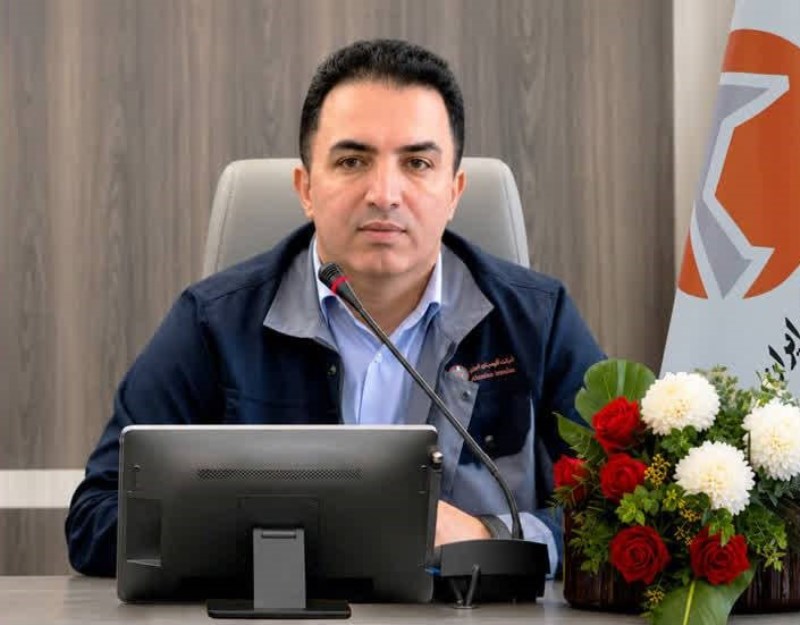
According to the Trade, Mining, and Steel News Agency, Soheil Asadi, Deputy CEO and Head of Iran Alumina Complex, by explaining the latest operational situation of this collection, announced that despite severe restrictions in energy and raw materials supply, in the first four months of 1405, the company has managed to register a 7% growth in production. He emphasized the strategic position of this collection as the only producer of alumina powder in the country and the first link in the aluminum production chain, noting that the company plays a decisive role in supplying raw materials to 200 downstream companies. This industrial complex, which is considered the most prominent industry in North Khorasan Province by creating 4,500 direct job opportunities, plays a vital role in the sustainability of the country’s mining industry through the exploitation of bauxite mines, alumina production plants, and ingot production units.
In the section of technical and managerial achievements, the head of Iran Alumina Complex referred to crisis management in supplying caustic soda and stated that with the exit of the main supplier of this strategic material from the circuit, the company’s experts, by implementing engineering solutions, including the maximum use of sodium carbonate, designing the caustic soda feeding system, and changing process parameters, were able to reduce the caustic soda consumption coefficient from 425 kilograms in 1404 to 295 kilograms per ton of production in the first four months of 1405. This action has resulted in saving more than 17,000 tons of caustic soda and reducing the cost of supplying raw materials by more than 750 billion tomans. Also, in the mining sector, despite serious challenges in supplying fuel from the beginning of this year, the company’s management, by facilitating the process of supplying bauxite from other domestic sources and identifying good reserves, has prevented interruptions in extraction operations and factory feed supply.
In the field of production statistics, Asadi stated that in the first four months of 1405, the total production of aluminum hydroxide by the company was 132,295 tons, which has increased by 8,594 tons compared to the same period last year, registering a 7% growth. He referred to energy crisis management and stated that in the face of the Tavanir organization’s order to reduce electricity consumption by 85%, the company, by adopting managerial measures and purchasing "uninterruptible electricity" at a price five times the normal rate, was able to supply 40% of the electricity needed for the ingot unit and 25% of the electricity for the alumina section, thus preventing the shutdown of 85% of the workshop’s revival furnaces and the exit of production capacity.