
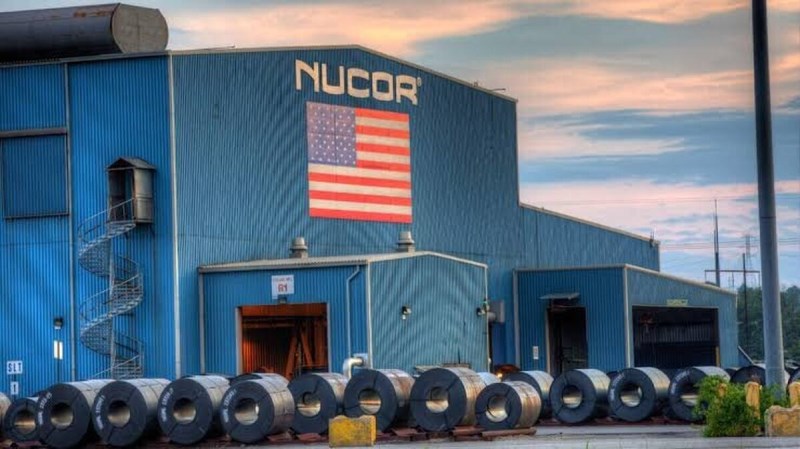
According to the Trade, Mining, and Steel News Agency, Nucor, the largest steelmaker in the US, after three weeks of stable prices, increased the cash sales price of hot-rolled coil (HRC) by $5 per short ton to $1,135. This move comes as production capacity constraints, relatively stable demand, and simultaneous price increases in the US and China indicate a continuation of the upward trend in the global flat steel market.
Nucor, the largest steel producer in the US, has once again increased the cash sales price of hot-rolled coil (HRC) after three weeks of price stability. Based on a letter to customers dated July 13, the cash sales price of HRC has increased by $5 per short ton compared to the previous week, reaching $1,135 per short ton. Nucor has also increased the cash sales price at its California Steel Industries (CSI) joint venture. Accordingly, the price of HRC at this facility has increased by $5 to $1,185 per short ton.
From the end of January to June 22, 2026, Nucor continuously increased the spot price of HRC, with prices rising by $5 to $15 per short ton at each stage. However, from June 22, this trend stopped, and the company maintained its proposed price unchanged at $1,130 per short ton for three weeks. Now, with the start of a new round of price increases, Nucor has once again sent a bullish signal to the US steel market. According to the company, the delivery time for orders remains between 3 to 5 weeks, and there has been no change in the production schedule.
The US market is waiting for price stability. According to a report by Steel Market Update (SMU), the average price of HRC in the US market reached $1,160 per short ton by July 7. The institute announced that many domestic market players expect the price of HRC to stabilize at current levels by the end of the year, as steel mills do not have significant excess capacity to accept new cash orders. On the other hand, unlike the usual summer seasonal downturn in previous years, the summer slump has not yet led to a sharp decline in demand, and most steelmakers only expect a limited and seasonal decrease in consumption.
Nucor’s price increase coincides with the move by Chinese steelmaker Baosteel to increase domestic HRC prices for August delivery. Baosteel has raised its product prices by 50 yuan per ton, based on expectations of improved downstream demand. However, in China, demand for flat steel products remains low due to unfavorable weather conditions and reduced activity in processing industries. The resumption of HRC price increases by Nucor, along with the rise in Baosteel’s prices, indicates that the world’s largest steelmakers are trying to support global HRC prices by relying on supply constraints, increased production costs, and expectations of improved demand, although the actual consumption situation in many major steel markets still faces challenges.